How Long Does Ceramic Window Tint Last? Complete Durability Guide
Investing in aftermarket automotive upgrades requires balancing upfront cost against long-term performance. If you are researching premium heat-rejection films for your vehicle, one core question likely stands out: how long does ceramic window tint last?
Unlike conventional dyed or hybrid window coverings, ceramic tint represents an advanced tier of automotive film engineering. Rather than simply darkening your glass, it utilizes microscopic, non-conductive ceramic nanoparticles designed to block harmful UV rays, reject infrared heat, and maintain visual clarity under demanding conditions.
Below is an in-depth, authoritative analysis of the lifespan, degradation factors, care requirements, and comparative performance metrics of ceramic window film.

Quick Reference: Automotive Tint Durability Comparison
To understand the longevity of ceramic film relative to traditional market alternatives, consider how different film materials perform over time:
| Film Type | Expected Lifespan | Primary Degradation Mechanism | Heat & UV Rejection Retention | Typical Warranty Coverage |
| Dyed Film | 1 – 3 Years | Dye breakdown (turns purple, bubbles) | Low; degrades rapidly with sunlight | 1–3 Years (Limited) |
| Metallic / Hybrid Film | 3 – 6 Years | Oxidation, adhesive breakdown, radio interference | Moderate; stable until delamination occurs | 3–5 Years |
| Carbon Film | 5 – 9 Years | Gradual adhesive softening under extreme heat | High; matte aesthetic does not fade | 5 Years to Lifetime |
| Ceramic Film | 10+ Years / Lifetime | Edge peeling if improperly cleaned; otherwise inert | Exceptional; nanoparticles do not break down | Lifetime (Manufacturer-Backed) |
The Core Answer: Expected Lifespan of Ceramic Film
Under normal driving and environmental conditions, premium ceramic tint typically lasts at least 10 years to the lifetime of the vehicle.
In most instances, high-grade ceramic window film outlasts the ownership period of the car itself. Because the ceramic nanoparticles embedded within the polyester sheets are inorganic and chemically stable, they do not bleach, turn purple, or lose their infrared-filtering capabilities under intense solar exposure.
When a ceramic installation fails prematurely, the root cause is almost never the degradation of the ceramic technology itself. Instead, premature wear typically stems from low-grade mounting adhesives, poor edge sealing during installation, physical abrasion, or chemical contamination from improper cleaning routines.
Why Ceramic Tint Outlasts Traditional Dyed and Metallic Films
Understanding why ceramic films achieve such exceptional durability requires a look at automotive glass chemistry.
1. Inorganic Nanoparticle Construction
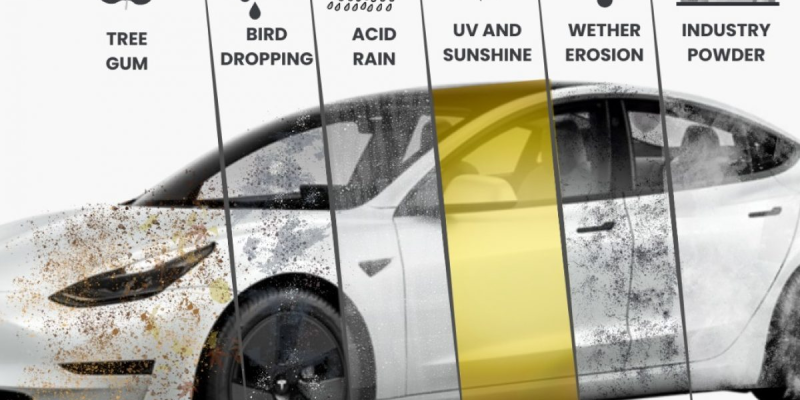
Standard tint relies on organic dyes to absorb solar radiation. Ultraviolet radiation from the sun contains high-energy photons that systematically shatter chemical bonds within organic dyes, leading to rapid discoloration, fading, and loss of heat rejection. Ceramic films, by contrast, utilize non-metallic, non-reactive ceramic nanoparticles that remain completely unaffected by solar radiation.
2. Zero Metal Oxidation
Metallic films reflect heat by sandwiching aluminum, nickel, or bronze layers between polyester sheets. Over years of exposure to atmospheric moisture and fluctuating temperatures, these metallic layers can oxidize, turning hazy or cloudy. Because ceramic films contain zero metallic components, they will never corrode or interfere with electronic signals such as GPS, cellular connectivity, or keyless entry systems.
3. High-Performance Mounting Adhesives
High-tier manufacturers pair ceramic layers with acrylic mounting adhesives engineered for thermal expansion and contraction. Glass expands and contracts significantly between scorching mid-day sun and freezing nighttime temperatures. Ceramic adhesives remain pliable and chemically bonded to the inner glass substrate through thousands of thermal cycles.
4 Major Factors That Influence How Long Ceramic Tint Will Last
While ceramic films are engineered to last a decade or longer, several variables dictate whether your tint reaches its maximum potential lifespan.
Climate and Sun Exposure
Vehicles stored in covered garages or shaded carports experience far less thermal cycling than vehicles parked daily in open asphalt lots under direct desert or subtropical sun. Prolonged thermal stress places immense pressure on the window film’s adhesive border along the top edge of rolling glass.
Quality of Glass Preparation and Installation
The finest film on the market will fail if installed on a contaminated surface. Microscopic dust particles, oils, or residue from factory shipping wax disrupt the bond between the adhesive and the glass. Over time, microscopic air pockets expand into visible bubbles, leading to premature delamination. Choosing a verified shop such as the certified professionals at The Tint Source ensures glass is mechanically decontaminated and heat-formed correctly to match curved windows.
Physical Friction and Window Usage
Every time a side window rolls down, the film contacts the internal weatherstripping and window gasket. If dirt, sand, or road grime accumulates inside these window felt channels, friction can cause horizontal micro-scratches on the film over several years.
Maintenance Routine and Cleaning Agents
Ammonia is the primary adversary of automotive window film. Standard household glass cleaners contain harsh chemicals that degrade optical adhesives and strip the protective hard-coat surface of ceramic film. Maintaining film integrity requires mild, tint-safe cleaning solutions.
Practical Maintenance: Maximizing the Lifespan of Your Tint
To ensure your investment delivers maximum optical clarity and comfort for a decade or more, follow these maintenance guidelines:
- Respect the Curing Period: Do not roll down windows or clean the glass for at least 3 to 5 days following installation. In cooler or humid conditions, moisture pockets may take up to 2 to 3 weeks to evaporate completely.
- Avoid Ammonia Cleaners: Always inspect bottle labels. Choose designated automotive glass cleaners labeled “tint-safe,” or clean windows using distilled water and a drop of mild dish soap.
- Use Clean Microfiber Towels: Avoid coarse paper towels, sponges, or shop rags. Paper towels are made from wood pulp and contain abrasive fibers capable of leaving permanent swirls across the film’s top coat.
- Keep Gaskets Free of Debris: Periodically wipe the interior rubber window squeegees with a damp microfiber cloth to remove trapped grit that could abrade the film surface over repeated window cycles.

Health and Comfort Benefits: Beyond Mere Durability
Evaluating how long does ceramic window tint last is also an evaluation of how long your vehicle will retain critical interior protections.
According to research published by the Skin Cancer Foundation, standard automotive glass shields occupants from most ultraviolet B (UVB) rays, but allows ultraviolet A (UVA) rays to penetrate deep into vehicle cabins. Quality ceramic window tint acts as an optical shield, blocking up to 99% of damaging UVA and UVB radiation.
This sustained protection provides two critical advantages throughout the life of the film:
- Cabin Preservation: Dashboard materials, leather seating, and touchscreen electronics are protected against cracking, warping, and fading.
- Passenger Wellness: Occupants avoid cumulative unilateral UV exposure, reducing long-term skin damage and lowering glare-induced eye strain during highway driving.
Conclusion
When asking how long does ceramic window tint last, the answer is clear: with reputable installation and routine, ammonia-free care, top-tier ceramic tint will reliably last 10 years or the lifetime of your vehicle. Because it eliminates the organic dyes and corrosive metals that plague traditional tint, ceramic film provides enduring value, permanent solar protection, and unmatched heat rejection year after year.